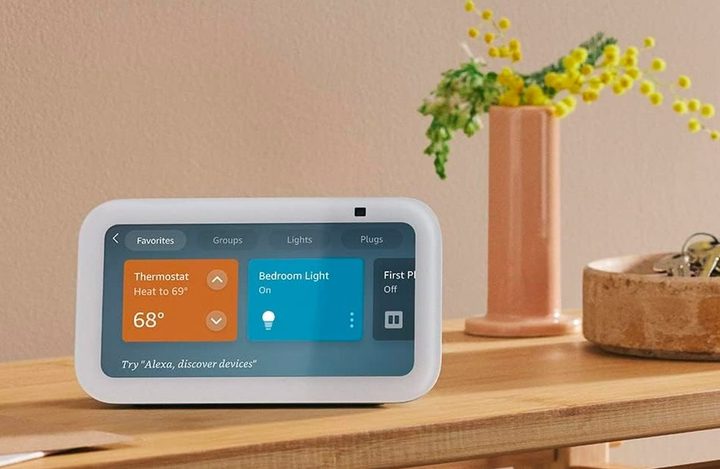
The Echo Show 5 is one of the smallest smart displays on the market. However, the new Echo Spot also boasts a tiny touchscreen — though it’s more of a smart alarm clock than it is smart display. But if you’re seeking a compact and connected display for your home, is one a better option than the other?
Here’s a closer look at the Echo Spot and Echo Show 5 to help you decide which is better for your needs.
Pricing and design

The Echo Spot and Echo Show 5 cost about the same. The new Echo Spot is $80, while the Echo Show 5 (3rd Gen) is slightly more expensive at $90. Their designs are radically different, however, as the Echo Show is a rectangular gadget with its entire front consumed by its display, while the Echo Spot features a circular design with its top half filled with a touchscreen. Both products look great in person and are built for small spaces like home offices, cramped kitchens, or bedroom nightstands.
Winner: Echo Spot
Display size and quality
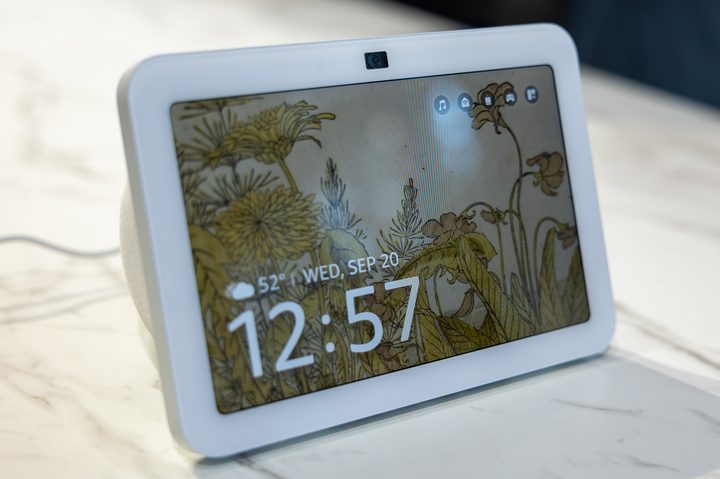
The Echo Spot has an ultra-compact touchscreen that’s just 2.83 inches. It gets you a 320 x 240 resolution, which sounds lackluster, but works fine on a screen this size. The Echo Show 5 feels massive in comparison, with a 5.5-inch touchscreen and a 960 x 480 resolution. So if you’re looking to actually stream TV shows or access apps that display a wealth of information, you’ll find the Echo Show 5 to be much more appealing.
Winner: Echo Show 5
Features and smart home connectivity

Many features are shared between the Echo Spot and Echo Show 5. This includes motion detection, support for Alexa, and the ability to control connected smart devices. However, there are a few big differences to note.
The main difference is the touchscreen size, which makes the Echo Show 5 a better entertainment hub than the Echo Spot. The Echo Show 5 also features a built-in camera for video chats. As for its audio system, you’ll get a 1.75-inch rear-firing speaker. That’s slightly larger than the 1.73 front-firing speaker on the Echo Spot, though both should sound decent and have no problems filling small rooms with soundwaves.
As for the Echo Spot, there’s little found here that can’t be found on the Echo Show 5. It’s slightly smaller than the Echo Show 5 at 4.5 inches wide compared to 5.8 inches wide, so if size is your main concern, the Spot will be easier to cram onto a crowded desk or bedside stand.
Winner: Echo Show 5
Which is better for your home?
If you’re looking for a tiny gadget that fills a variety of roles, the Echo Show 5 is your best option. Not only can it show you the time, let you check the weather, or stream your favorite show, but it’s also compatible with Alexa so you can control the rest of your smart home.
The Echo Spot also works with Alexa, though its tiny screen really limits its functionality as a central entertainment hub. But if you’re seeking a gadget for a nightstand, the Echo Spot truly shines. Not only is it tiny, but it’s purpose-built as a smart alarm clock, making it easy for you to see and control all your alarms at a glance. It’s also slightly cheaper than the Echo Show 5.
You’ll get a lot more bang for your buck with the Echo Show 5, but the Echo Spot is a nice addition to the Amazon lineup for those seeking a compact bedside companion.